Showing posts with label cussonia. Show all posts

Saturday, January 7, 2023

Plantings!

Our volunteer workday today was done before the rain, and we got a ton of plants into the ground. Matt, Chris and Josh worked away and not only did we do a little weeding and turn the compost at PG, but also planted a Mexican Fan Palm (Washingtonia robusta - left). We also planted:

13 Lychnis coronaria (Rose Campion)

3 Agave americana striata

1 Cussonia paniculata

1 Peritoma arborea (Bladderpod)

Moved 1 Yucca from PG to PRG and planted two Yucca cuttings alongside it.

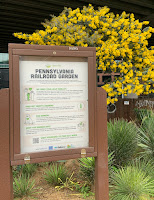
Josh and I cut back a Phlomis at PRG, I picked up litter, and Chris cut back a Lavatera with his usual decisiveness. We also put new signs into the kiosks at both PG and PRG - I hope they work to get more interest in our volunteer days!

By the way - all but the Lychnis and Peritoma plants were kindly donated by Mat McGrath of Farallon Gardens. Thanks Mat! Check him out on Facebook and Instagram!

Saturday, January 2, 2021

African tree bonanza

Happy new year! We decided to kick off 2021 by planting some new trees from Africa from one our favorite genera, Cussonia. It was a bit of a soggy volunteer day but John, Chris and Bill helped Matt and I get the plants in and it was satisfying.

I had ordered 6 Cussonia paniculata from one of our favorite suppliers (Flora Grubb) a few months ago, expecting to receive six lovely blue-gray leaved plants described as "a large evergreen shrub or small tree" topping out around 10-15' in height and native to South Africa. We have one at home and it's lovely - one trunk, small poofball on top. Yep - we have lots of room for things like that.

However, what was delivered looked suspiciously different. Greener leaves, multi stemmed in some cases... and a trip to the Flora Grubb retail location caused more suspicion: they had the same 5 gallon plants but labelled Cussonia transvaalensis.

Nothing wrong with that. another blue-green leaves plant that tops out around 16'. A quick email to Flora Grubb's people and they confirmed the mixup - these are C. transvaalensis. Except... are they? The leaves are very green... and the multi-stemmed look is worryingly like Cussonia spicata, a bit sprawly monster going close to 50' tall!

Well, too late. They had to go in the ground so we will soon see what we get. Three went in at PRG (at the north corner, and two along the fenceline), three went in at PG  (in the middle back bed, on the terraces, and up at the very top of the garden by a loquat) And we also planted two Yucca filifera and two Yucca guatemalensis at PRG.

Matt fixed the tool chest with a new hasp from Chris (thank you!), and the new plants got some water (the ground is bone dry past the first 2" still...) and off we went home. Good job, chaps!

Thursday, February 27, 2020

Late February and the sun is blazing'

Cussonia wants a drink
This weekend Matt and I hit the garden twice. And although Matt went to baseball practice shortly afterwards, we got a lot of weeding done in the gorgeous sun.

One thing we noticed when we arrived was that one of the Cussonias was wilting. This is a biggish tree, and after a few weeks with no water at the height of the winter growing season, it was quite alarming to see. We set up a hose and gave it a drink for an hour - the next day it was looking a bit better. This is not a great sign though - we're at about 38% of our usual rainfall for the winter season, which is a bit shocking.

Mulched and ready to rock!
Between us, we thoroughly weeded and mulched parts of the middle front bed, the back bed and the left bed. The parts that didn't have ground cover, that is - always an invitation to weeds, and despite the lack of rain they have been growing like maniacs.

The weeds went in the compost bins, two of which are almost full. It's time to turn the bins and make compost again!


On Sunday I set about weeding and mulching by the wrong way sign - an area about 10' x 20' in dimension, and around a lot of Agaves. My hands and forearms are looking pretty nicked up after that task. 

Slender salamander
I came across a nice little California slender salamander (Batrachoseps attenuatus) while I was repairing the path edging. So cute with his tiny little legs. These guys hunt for earthworms, and are a sign that the garden is pretty healthy. This one wriggled off to live under the bench.

After that I weeded around the new plants put in recently up at the top of the garden. They were in danger of being swallowed by weeds - seemingly overnight - so protecting them is key. I gave them water as well - the ones that needed it, anyway. 

Left bed weeded
I also weeded in the front bed and mulched thoroughly. Nothing like a nice layer of wood chips to keep those weeds from getting involved. The garden is looking very luscious right now - head out and enjoy it :)

Thursday, May 12, 2016

Plant profile: Cussonia

Cussonia spicata
Easy to grow, not too tall, strikingly architectural and evergreen, this genus is a great tree for our area and a personal favorite of mine. I'm surprised they aren't more popular, but large specimens are not often available to buy. Annie's Annuals often has small ones though, and they grow pretty fast. Get a hit of funky, tropical, yet drought tolerant action in your garden!

Latin name: Cussonia ("kuh-SOH-nee-ah")
Common name: Cabbage Tree
Originally from: Southern Africa.
Blooms: Big crazy spikes that the bees love.
Light: Full sun
Water: Survived severe drought!
Drainage: Excellent
Height x width: 15-40' tall and wide
USDA Zones: 9a-11b
Where to find in P. Garden: In the left bed we have a large Cussonia spicata, and in the brights bed a somewhat smaller Cussonia spicata.

Cussonia leaf
The name Cussonia is named after the Professor of Botany at the University of Montpellier, Prof. Pierre Cusson (1727 - 1783). We got our first one way back in February 2009 - a C. spicata with shiny green leaves that grew from a 1 gallon plant to a big multi-trunked 15' tall tree in just a few years. Eventually it should reach 40' tall, unless the dry weather keeps knocking it back.

During the 5 year drought it started to die back from the top, and I thought it wasn't going to make it. I watered it twice in the final year, and it pulled through. As of April 20156 it is sprouting vigorously from the base. You can see the dead branches at the top of the photo below.

Our other Cussonia spicata was planted in the brights bed in 2011 and survived the drought fine. It's got a way to go to attain it's final height of 25-40'.

I also planted a Cussonia paniculata in the middle back bed, but it was somewhat smothered by other plants around it and died. I'd love another of that species - the blue-grey leaves are lovely, and it only gets 15' tall.


Cussonia spicata
In addition to its popularity as a decorative garden tree and useful accent plant, the leaves of C. spicata are not only beautiful in shape but also traditionally used as a treatment for indigestion, and the roots are succulent and edible - mashed roots have also been used in the treatment of malaria.

The bark is cork-like, and the wood is very soft and decays easily - it's used to make mole traps and brake blocks for ox-wagons in Africa.

I highly recommend this plant. With an exotic mop of deeply-divided leaves and interesting bark on the trunk, it looks a bit like a funky palm tree.

Update 2.5.18: Our first and largest Cussonia is flowering! It remains to be seen if the flowers will produce viable seed, but I hope so.

Sunday, September 6, 2015

Volunteer Labor Day

Sad Cussonia
Happy Labor Day weekend!

Today's volunteer day was sunny and warm (go Potrero Hill!) and I had three able bodied guys to work with. We got lots done.

Bill from Redwood City came by and he and our regular John cut back all the Agapanthus dead heads, after which John turned and watered the compost. Our heap is now incredibly tall and a workday where we rent a gas powered chipper to reduce the mountain is overdue.

Nathan and Bill cut back dead plants: the list of dead plants now includes two Athanasia pinnata, and some bronze Phormiums. While cutting back the cardoon, Nathan saw new sprouts emerging, so I watered it thoroughly.

The plants doing surprisingly well are Doryanthes (found a second one in the middle of the brights bed) and Cordyline cultivars (while the species dies. Odd.)

I wrestled the hoses again to water the most desperate plants. I can see evidence that last weeks watering helped, so I'll keep doing that to save some of the best plants until El NiƱo shows up...

My camera died so no pictures yet, but Bill found a praying mantis which was pretty cool!

Saturday, May 23, 2015

Crispy dry out there...


Thanks for dumping that...
Despite a sprinkle of rain this week the gardens are looking crispy dry - well, the plants that aren't super xeric, that is. The Fuchsia boliviana is in a sad state and will likely die.

Even the Cussonia natalensis is looking iffy: if it dies I shall be very sad indeed. The Agaves, Aloes and other succulents are as happy as clams, naturally.

Agave tequilana flowering
Matt and I spent an hour or so picking trash at PRG today. We found, and filled, three wheelie bins! We left them by a big pile of wire casings someone dumped at the garden - they recycle wire at the scrap metal place around the corner and I suppose dumping the plastic casings in a garden seems totally fine to some types.

We also picked up a dozen or more dog poos in bags. What is up with that dog people? Why do some of you pick up your pet's waste, bag it, tie it, then throw it in the bushes or straight up leave it on the path?

Agave "Lemon Lime"
Calandrinia and Kniphofias
flowering
Some people just leave loose craps right on top of plants though. Harder to pick up so you don't even try? Pretty lame.

In other news a number of Agaves are flowering now. The Agave tequilana we planted as a pup in 2009 is huge, and going off like a rocket (image shown) as well as BOTH of the big Agave americana "Lemon Lime" specimens that Matt and Paul brought from Healdsburg. I'm sad about that! Almost all species of Agave die after flowering so we will replace them with something equally epic when the flowers are done - which will be months from now.

Sunday, May 1, 2011

We skipped spring...

Blue Eyed Grass
(Sisyrinchium bellum)
... and went straight to summer! It's hot out in the garden this weekend, so Matt and I went out and did a few jobs, but didn't broil in the sun too much (reapply - reapply!)

On Saturday Matt turned the compost bin, taking out a few bucketfuls of good compost and spreading it around various plants. I did the same with the worm bin's contents, giving the Cordylines in the wine barrels at the front of the garden a hefty dose of goodness. They will either take off like rockets, or die smiling...

I noted that the lovely pink Dipogon lignosus (Australian Pea Vine) creeping around the wine barrels has been tidied up too - I think we have Dee to thank for that work, which appears to have been very carefully done. That vine is enthusiastic about covering anything within reach - great for the arch, not so great for the surrounding plants.

Back slope prep
Next Matt cut back the floppy leaves on the cardoon (Cynara cardunculus) which is as usual going berserk and leaning on everything around it in a desperate bid to take over the universe.

Emily had bought another fabulous Cussonia for the garden recently, C. paniculata, and I planted that in the middle back bed after weeding out some non-performing daylilies and trimming back some lavenders and rosemary to make room. This brings our Cussonia species count to three, which I think is excellent as they are such a cool and unusual small tree.

Today we marked off and weeded the currently inaccessible back slope so that Ron from Iron Maverick could get in and create the terraces.

Hope he can start that soon: the area is treacherous, and I have a lot of nice cacti and agaves that would love to grow in that spot, where it's seriously hot and dry most of the year.

Tidy Tips in action
After that, we planted three lavanders in the lavender hedge and watered them in. The Tidy Tips (Layia platyglossa) seeds we planted way back in December 2009 are flowering now - very cute little native annual daisy. Another lovely native currently in flower in the middle back bed is the Blue Eyed Grass

(Sisyrinchium bellum) - what a charmer.

Lastly I watered the newly planted plants and fed the worms in the worm bin some fennel - hope they like that, because that's one weed I'd love to see go extinct in the garden!

Sunday, April 3, 2011

Sunny Sunday

 
Watsonia flower
Today was another lovely warm day, so I went to the garden and tried to figure out the best way to organize the area behind the wrong way sign. With the recent demise of all our Cannas due to infection with canna virus, we have had to dig them all out and replace them with something else.

I removed a bunch of leftover Cannas and weeds, and moved a Gaillardia over to the edge. Then I planted a nice red Coprosma of some unknown variety that I'd been saving at home. I'm going to move our Banksia over there too, and add a Euphorbia and some Aloes and Agaves too. I'll have to wait until the white Watsonias are done flowering though - they're just getting started and won't appreciate being moved right now.

Scilla flower
In the top bed I planted a Cussonia spicata as a tall accent on the right end. This is a really cool small African cabbage tree that has lovely unusual leaves. We have room for one more Cussonia at the garden and I'm aiming for one of the blue-grey leaved species.

In the middle back bed I weeded and trimmed, and redid the front border using the branches Deric and Kome gave us. Perfect branches for weaving - long, supple and smooth. I wish we could get loads more, but luckily we have a nice pile that'll last a while.

California poppy "White Linen"
After all that I was a bit hot, so I walked up the street to get a drink. On the way I dropped in to Plow to let the owners know what's wrong with their pear tree out front (a fungus) and on the way back I met Karen who as it turns out owned the original Tibouchina that Jim planted at the garden!

Tuesday, December 14, 2010

Garden neglected

Emily's Ranunculus looking
gorgeous
Last weekend I didn't set foot in the garden once. What with the short days and competing holiday-themed tasks to do, it was pretty sad for me not to check in with my little plants.

I did, however, make it to the San Francisco Botanical Garden 2 for 1 sale. I was looking for two xeric shrubs. One to put near the bench to replace a black sage (Salvia mellifera) which I find a bit boring, and another to anchor the bed we cleared the week before.

I had a list of potential candidates, and found none of them. I did however get a few plants that I hope will do instead. And a few others for various other spots in the garden. I got:

Hibbertia astera
Cussonia spicata
Carpenteria californica
Dianella tasmanica (variagated)
Daphne odora

I know all these guys will do fantastically in the garden, and I can't wait to plant them next weekend!

Friday, February 20, 2009

Can't wait for the weekend

My new rule is "don't get new plants unless the old ones are all planted" since we've had a dozen pots hanging around the house, car and garden waiting patiently. I have been worried they'd be stolen or die, so last night we planted the cussonia by the lights of Gary's car, and this morning I planted an anisodontea and a little thorny twig Jared gave us, name unknown. Hopefully the rest of the plants go in tomorrow and we can get on with step building, border weaving and weeding without being distracted by the fun stuff!

Wednesday, February 18, 2009

Before work

We had a few plants languishing in the car (just ran out of energy to plant them last weekend) and they need to get in the ground before they sweat to death. This morning we put in a yucca rigida, euphorbia mellifera (honey spurge) and an unidentified reddish phormium-ish looking thing.

I also took a photo of another plant that needs to be identified, above. Any guesses?

UPDATE: it's cussonia natalensis “Rock Cabbage Tree” - a drought tolerant tree (yay!) "from the wooded grasslands of Natal and Gauteng in South Africa and also Zimbabwe and Swaziland in Southern Africa." OK, well then - should be able to manage the "hot, dry" site we have. Cool plant!
 
page counter
Free Hit Counter